You Won’t Believe What’s Hiding in Nantes
Nantes, France, is more than just a stopover between Paris and the Atlantic coast. Tucked away from the usual tourist trails, it pulses with local life, artistic soul, and quiet charm. I wandered its forgotten alleys, stumbled on secret courtyards, and sipped coffee where only locals go. This isn’t the France you see in guidebooks—it’s real, raw, and deeply cultural. If you're craving authenticity over clichés, Nantes might just surprise you.
The Forgotten Heart of Nantes
Nestled along the Loire River, Nantes holds layers of history beneath its modern surface, particularly in neighborhoods like Feydeau and Île de Nantes. Once bustling industrial and maritime districts, these areas were nearly abandoned by the late 20th century, left to decay as shipping declined and factories shuttered. Yet rather than erase the past, the city chose to reinvent it. Today, Feydeau Island, part of the larger Île de Nantes, stands as a testament to thoughtful urban renewal. Cobblestone streets wind past 18th- and 19th-century merchant homes with ornate wrought-iron balconies, their facades softened by time and weather. These buildings, once warehouses for colonial goods like sugar and coffee, now house art galleries, design studios, and intimate bistros.
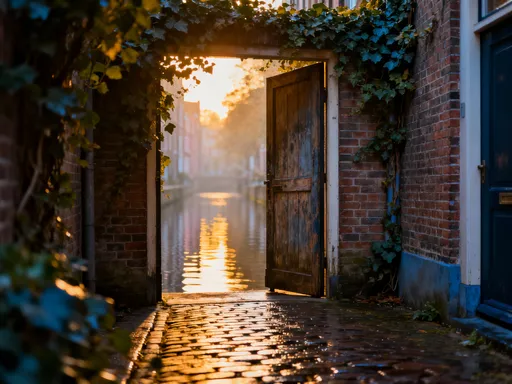
What makes this transformation remarkable is not just the preservation of architecture, but the respect for local identity. Unlike cities that gentrify with chain stores and luxury condos, Nantes has maintained a human scale. You’ll find no global franchises on Rue de la Boucherie, only family-run shops selling handmade leather goods or vintage books. Hidden courtyards—known locally as passages—open unexpectedly between buildings, revealing ivy-covered walls, wooden shutters, and potted geraniums. These quiet spaces, often unlocked and accessible to all, feel like private worlds accidentally left open to visitors. They are not curated for tourism but cherished by residents as small sanctuaries of calm in the urban rhythm.
The city’s maritime legacy remains visible in subtle ways. Dock cranes have been painted in bright colors and repurposed as public art. Old shipyards now host open-air concerts and weekend markets. Even the street names—Rue des Fossés, Quai de la Fosse—echo a time when Nantes was one of France’s most important ports, central to transatlantic trade. While this history includes difficult chapters, the city does not shy away from it. Instead, it integrates memory into daily life, allowing the past to inform rather than define the present. For travelers, this means encountering a place that feels lived-in, where every corner tells a story not of perfection, but of resilience and reinvention.
Art That Lives in the Streets
In Nantes, art is not confined to museums or galleries—it spills into the streets, climbs walls, and moves through the air on mechanical wings. The city has earned a reputation as one of France’s most innovative cultural destinations, thanks largely to its commitment to public art as a form of civic dialogue. Nowhere is this more evident than at the Machines de l’Île, a surreal artistic project that blends engineering, fantasy, and storytelling. At its heart stands the Great Elephant, a 12-meter-tall mechanical creature that carries visitors on a slow walk across the former shipyards. Powered by hydraulics and driven by unseen operators, the elephant breathes, trumpets, and even sprays water from its trunk—a whimsical tribute to Jules Verne, who was born in Nantes and imagined impossible journeys.
But the Machines de l’Île are just one thread in a much larger tapestry of urban creativity. Murals cover entire building facades, transforming blank walls into vibrant narratives. One depicts a woman reading a book whose pages become birds in flight; another shows a diver suspended mid-air above a dry street, as if gravity had been suspended. These works are not random decorations. Many are part of the Troit Carré (Three Squares) art district, where local and international artists collaborate with residents to create pieces that reflect community values, environmental concerns, or historical memory. The result is a cityscape that feels alive, constantly evolving, and deeply personal.
What sets Nantes apart is how seamlessly art integrates into daily life. Children play beneath giant insect sculptures. Office workers pause at lunch to watch a kinetic wind sculpture spin in the breeze. Even tram stops feature poetry etched into glass panels. This is not art for prestige or tourism—it is art for connection. The city invests in long-term projects, often involving workshops where locals contribute ideas or help paint. This participatory approach fosters a sense of ownership, making residents not just viewers but co-creators. For visitors, the effect is profound: you don’t just see art, you feel included in it. It invites curiosity, slows your pace, and encourages you to look closer—not just at walls, but at the people and stories behind them.
A Local’s Coffee Ritual
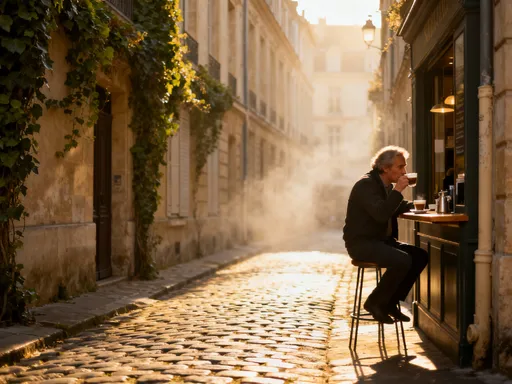
To understand the rhythm of Nantes, start with coffee. Not the kind served in porcelain cups at tourist cafés, but the quick, no-frills espresso at a neighborhood café-tabac, where the counter is worn smooth by decades of elbows and the air carries the scent of roasted beans and fresh pastry. These small, family-run establishments are scattered throughout the city’s residential streets, often marked only by a red awning and a chalkboard listing the day’s specials. They are not in guidebooks, rarely have English menus, and never rush their customers—because here, coffee is not a commodity, but a ritual.
Mornings follow a quiet pattern. Around 7:30, regulars arrive—shopkeepers, teachers, retirees—each greeted by name. They stand at the counter, exchange a few words in rapid French, and sip their un café in silence or light conversation. A croissant, warmed just enough to soften the buttery layers, accompanies the drink. There’s no pressure to order food, no Wi-Fi to distract, no background music competing with the hum of conversation. The pace is slow, deliberate, respectful of the moment. This is not about productivity or multitasking; it’s about presence.
For visitors willing to step into this rhythm, the reward is access to a deeper layer of culture. Ordering in broken French is not a barrier—it’s often met with a smile and patient correction. The barista might recommend a local pastry, like a chouquettes or a far aux pruneaux, a traditional Nantes dessert made with prunes and rum. These small exchanges, though brief, create a sense of belonging. They remind you that travel is not just about seeing new places, but about participating in their daily life. In a world of fast tourism and curated experiences, these cafés offer something rare: authenticity without performance. They are not staged for visitors—they exist for the people who live here, and that is precisely what makes them worth seeking out.
Markets Where Tradition Feels Alive
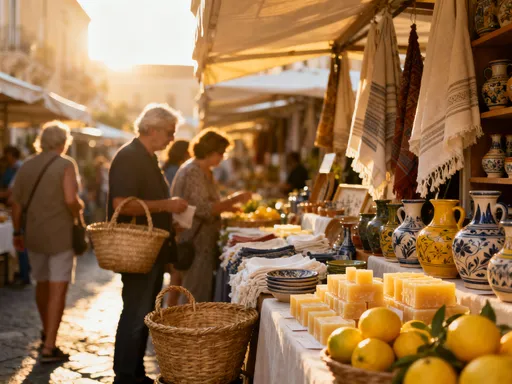
If the cafés are the pulse of Nantes, its markets are the soul. The most iconic is the Halles de la Place du Bouffay, a covered market housed in a 19th-century iron and glass structure that glows softly in the morning light. Stepping inside is like entering a living archive of regional flavors and traditions. The air is rich with the tang of aged cheeses, the smoky aroma of cured meats, and the sweetness of ripe strawberries in summer. Vendors call out greetings, rearrange displays of artichokes and radishes, and slice charcuterie with practiced precision. This is not a market designed for photo ops—it is a working marketplace, where locals come to shop, chat, and carry on routines passed down through generations.
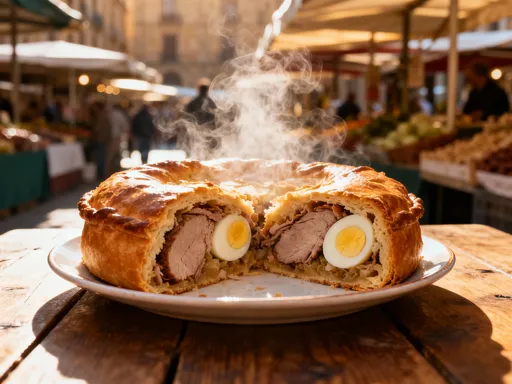
What makes the Bouffay market special is the continuity of its artisans. Many stallholders have worked here for decades, some taking over from parents or grandparents. A cheese vendor might explain the difference between a young and aged crottin de Chavignol, while a fishmonger proudly displays oysters from nearby Guérande, harvested that morning. The influence of neighboring Brittany is evident in the abundance of buckwheat crepes, salted butter, and cider, but Nantes adds its own twist—spices from its colonial past still echo in sausages flavored with nutmeg and cloves, or in the occasional West Indian food stand offering accras de morue.
Shopping here is not a transaction but a conversation. Vendors remember preferences, offer samples without prompting, and suggest pairings—“Try this apple with the Camembert, it balances the richness.” For visitors, the experience is both sensory and emotional. You taste foods that have shaped local palates for centuries, but more importantly, you witness a culture of care and craftsmanship. There are no plastic-wrapped products from distant factories, no generic labels. Everything has a story, a maker, a season. Even the layout of the market feels intentional—narrow aisles encourage slow movement, chance encounters, and lingering. It’s a space designed not for efficiency, but for connection. In an age of supermarkets and online delivery, the Halles de la Place du Bouffay stands as a quiet resistance—a reminder that food is not just fuel, but a thread that binds people to place and to each other.
The Secret Gardens You Won’t Find on Maps
Amid the city’s streets and markets, Nantes offers another kind of sanctuary: its hidden green spaces. Unlike the grand, manicured gardens of Paris, these are quieter, wilder, and more personal. The Jardin des Plantes, while well-known, has corners that feel undiscovered—shaded paths beneath century-old trees, glass greenhouses filled with tropical plants, and a small botanical collection that dates back to the 1800s. Yet even more rewarding are the lesser-known spots, like the Jardin de la Pépinière or the riverside trails along the Erdre, a tributary of the Loire often called “the most beautiful river in France.”
These gardens are not designed for spectacle. They are places where locals walk their dogs, read books on weathered benches, or sit by the water watching ducks glide by. The Erdre, in particular, is a favorite for quiet reflection. In spring, cherry blossoms line its banks; in autumn, the trees turn gold and red, their reflections shimmering on the slow-moving current. Small boats—some traditional wooden gabarres, others modern electric craft—drift past, adding to the sense of peaceful movement. There are no crowds, no ticket booths, no guided tours. Just open access and a deep respect for stillness.
What makes these spaces so special is their integration into daily life. Parents bring children to feed the ducks. Couples share sandwiches under willow trees. Elderly residents walk the same paths every afternoon, their presence a quiet testament to continuity. These gardens are not escapes from the city—they are part of it, woven into the urban fabric like green threads in a tapestry. For visitors, they offer a different way of experiencing Nantes: not through sightseeing, but through slowing down. You don’t need a map to find them. You just need to wander, to look for the narrow gate between buildings, the path that leads away from the noise. And when you do, you’ll find not just beauty, but a sense of peace that feels earned, not manufactured.
How to Move Like a Resident
To truly experience Nantes, shift your mindset from tourist to temporary resident. This doesn’t require fluency in French or years of local knowledge—just a willingness to adapt to the city’s rhythm. Start with transportation. Nantes has one of France’s most efficient tram systems, with four lines that connect the historic center to residential neighborhoods and cultural sites. Locals rely on it daily, and so should you. Instead of rushing from landmark to landmark, let the tram guide your exploration. Ride Line 1 to the Machines de l’Île, Line 2 to the Jardin des Plantes, or Line 3 to the quieter eastern districts. Step off at random stops, follow foot traffic, and let curiosity lead you.
Timing matters, too. Locals shop mid-morning, when markets are fully stocked and cafés are still quiet. They avoid weekends at popular sites, preferring weekday afternoons when crowds thin. A visit to the Château des Ducs de Bretagne is more enjoyable at 3 p.m. on a Tuesday than at noon on Saturday. Even small choices—like skipping the audio guide or putting your phone away—can deepen your experience. Without a scripted narrative, you’re free to notice details: the pattern of tiles in a courtyard, the way light falls on a mural, the sound of a street musician playing accordion near the cathedral.
Another key is embracing slowness. Nantes is not a city for checklists. It rewards lingering, returning, and revisiting. Have coffee at the same café two days in a row. Walk the same riverside path at different times of day. You’ll begin to notice subtle changes—the vendor who rearranged her flowers, the artist who added a new mural, the old man who always sits on the same bench. These repetitions create a sense of familiarity, even in a place you’re just visiting. And that, ultimately, is the goal: not to see everything, but to feel connected to something real.
Why Nantes Changes How You Travel
Nantes doesn’t announce its wonders with billboards or crowds. It reveals them slowly, quietly, to those who pay attention. And in doing so, it changes the way you think about travel itself. Most tourist destinations are built on spectacle—iconic landmarks, photo opportunities, must-see lists. Nantes offers something different: intimacy. It teaches you to value moments over monuments, presence over productivity, and connection over consumption. You don’t come here to tick boxes, but to feel a place in your bones.
This shift in perspective has lasting effects. After Nantes, you might find yourself looking beyond the highlights in other cities, seeking out neighborhood markets, local cafés, and quiet parks. You might start traveling with fewer plans and more openness, trusting that the best experiences often come from unplanned detours. You might even begin to see your own city differently, noticing the hidden courtyards, the corner bakeries, the small rituals that make daily life meaningful.
More than any single attraction, it is this mindset that Nantes offers. It reminds us that culture is not something to be consumed, but lived. It is in the way people greet each other at the market, the care put into a simple meal, the pride in a mural painted by a local artist. These are not performances for visitors—they are the quiet, enduring truths of a place. And when you leave Nantes, you don’t just carry memories of what you saw. You carry a deeper understanding of how to be in the world: with patience, with curiosity, with respect for the unnoticed. That is the city’s real secret—and its greatest gift.