What Moscow’s Neighborhoods Taught Me About Real Russia
You know what? Moscow isn’t just about Red Square and fancy museums. I went looking for the city’s soul and found it in its neighborhoods—each with its own rhythm, flavor, and story. From historic lanes to hipster hangouts, exploring districts like Zamoskvorechye and Krasnoselsky revealed a side of Moscow most tourists miss. This is travel at ground level, raw and real. If you're chasing authenticity, this is where to start. Beyond the grand facades and golden domes, Moscow pulses with life in its side streets, courtyards, and local markets. These are the places where Muscovites live, work, and gather—not for show, but in quiet, everyday dignity. To know this city is to walk its districts slowly, listen to its whispers, and respect its layers of history. This journey is not about ticking off landmarks, but about understanding a culture through its neighborhoods, one step at a time.
Beyond the Postcard: Why Districts Define Moscow
Moscow is often reduced to a collection of postcard images: St. Basil’s Cathedral in full bloom, the opulent halls of the Bolshoi Theatre, the solemn grandeur of Lenin’s Mausoleum. While these sites are undeniably iconic, they represent only a fraction of the city’s true identity. The real essence of Moscow unfolds not in the spotlight of tourism, but in the rhythm of its neighborhoods. Each district carries its own character, shaped by centuries of history, architectural evolution, and the daily lives of its residents. To explore Moscow solely through its landmarks is to see the cover of a book without reading its pages. The city’s soul resides in its streets, where Soviet-era apartment blocks stand beside restored merchant houses, and where modern cafes bloom in the shadows of Orthodox churches.
Urban development in Moscow has always reflected the nation’s shifting priorities. In the 19th century, the city expanded outward with the rise of the merchant class, leading to the construction of elegant townhouses and quiet residential enclaves. The Soviet era brought a different vision—one of centralized planning, functional design, and mass housing. Towering Khrushchyovka apartment blocks were erected to accommodate the growing population, often at the expense of architectural charm. Yet even within this uniformity, communities thrived, creating pockets of identity and resilience. In recent decades, a wave of revitalization has transformed many districts, blending preservation with modernization. Historic facades are restored, old factories turned into cultural centers, and green spaces expanded. This layered evolution makes Moscow a city of contrasts, where every neighborhood tells a different chapter of Russia’s story.
For travelers seeking authenticity, neighborhood exploration offers a deeper, more meaningful connection. It allows for spontaneous encounters—chatting with a babushka selling homemade jam, stumbling upon a neighborhood choir practicing in a courtyard, or discovering a centuries-old chapel tucked between modern shops. These moments cannot be scheduled on a guided tour, but they are the ones that linger in memory. By stepping into the everyday life of a district, visitors move beyond observation and begin to understand the values, rhythms, and spirit of the people who call Moscow home. This kind of travel is not passive; it requires curiosity, patience, and respect. But the rewards are profound—a richer, more human understanding of one of the world’s most complex cities.
Zamoskvorechye: Where Old Moscow Still Breathes
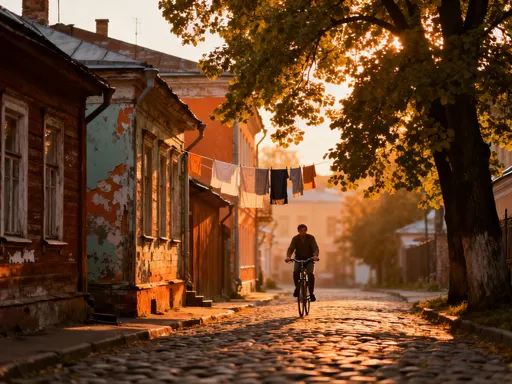
South of the Moskva River lies Zamoskvorechye, a district that feels like a secret whispered through time. Unlike the polished grandeur of the city center, this neighborhood retains the quiet dignity of pre-revolutionary Moscow. Cobblestone streets wind beneath leafy lindens, and wooden houses with carved window frames stand alongside 19th-century brick mansions. Many of these buildings once belonged to merchants and artisans, and their facades still bear the marks of craftsmanship—wrought-iron balconies, ornate cornices, and colorful stucco details. Walking here is like moving through a living museum, where history isn’t sealed behind glass but lives in the peeling paint and creaking floorboards of everyday homes.
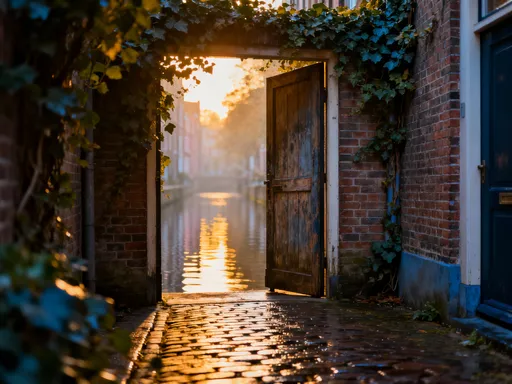
One of the most striking aspects of Zamoskvorechye is its network of inner courtyards—hidden spaces tucked behind unassuming gates. These yards, known locally as *dvory*, were once the heart of community life. They hosted children’s games, laundry lines, and summer gatherings. Today, many remain surprisingly intact, with communal benches, flower beds, and even small vegetable plots. I remember stepping through a rusted gate one afternoon and finding an elderly couple sipping tea at a weathered table, their cat curled at their feet. They smiled but didn’t speak, content in their quiet corner of the city. These courtyards are not tourist attractions; they are private realms, protected by residents who value their peace. Yet their presence speaks volumes about the enduring strength of community in Moscow.
Another highlight of the district is its collection of small, family-run tea houses and *stolovayas*—traditional Soviet-style canteens. In one such spot, I found a menu handwritten on a chalkboard: borscht, pelmeni, and a simple cabbage salad. The owner, a woman in her sixties with kind eyes, served me at a wooden table covered in a red-checkered cloth. As I ate, an old radio played classical music in the corner. There was no Wi-Fi, no English menu, no attempt to cater to foreigners. It was real, unfiltered, and deeply comforting. Moments like this are rare in more commercialized areas of the city, but they are the soul of Zamoskvorechye. This district doesn’t perform for visitors; it simply exists, preserving a quieter, more intimate version of Russian life.
Arbat: The Street That Never Sleeps (But Has a Quiet Soul)
Old Arbat Street is one of Moscow’s most famous thoroughfares, a pedestrian-only lane lined with souvenir stalls, street artists, and bustling cafes. By midday, it teems with tourists snapping photos, buying matryoshka dolls, and listening to guitarists play Tchaikovsky on electric guitars. The energy is vibrant, almost overwhelming. But just steps away from the main drag, the character of Arbat shifts dramatically. The side streets—quiet, tree-lined, and lined with 19th-century townhouses—reveal a different world. Here, laundry flutters from balconies, bicycles lean against gates, and the scent of baking bread drifts from open windows. This is the residential Arbat, where writers, artists, and intellectuals have lived for generations.
The literary history of Arbat is well-documented. Anton Chekhov once lived on this street, and his former apartment is now a small museum filled with personal belongings and handwritten manuscripts. Nearby, the home of poet Vladimir Mayakovsky has been preserved as a memorial, its walls covered in revolutionary-era posters and photographs. These spaces offer a glimpse into the creative spirit that has long defined the neighborhood. But beyond the museums, the spirit of literature lingers in the air. Bookstores with narrow shelves and creaky floors still dot the side streets, selling everything from classic Russian novels to rare poetry collections. I once found a first edition of Pushkin’s verses tucked between modern paperbacks, its pages yellowed but intact—a small treasure in a city that still reveres the written word.
For travelers, the best time to experience Arbat is early in the morning, before the crowds arrive. At sunrise, the street is nearly empty, the cobblestones still damp with dew. The only sounds are the distant hum of the metro and the occasional bark of a dog. This is when Arbat feels most authentic—peaceful, reflective, alive with possibility. I recommend bringing a thermos of tea and sitting on a bench near the monument to the poet Bulat Okudzhava, whose songs once captured the soul of Soviet youth. In those quiet moments, the street reveals its deeper rhythm, a blend of artistic legacy and everyday resilience. Arbat is not just a place to shop or sightsee; it is a living archive of Moscow’s cultural heart.
Tagansky & Zvenigorodskaya: Urban Edge Meets Cozy Living
East of the city center, the Tagansky district presents a different face of Moscow—one shaped by Soviet urban planning and modern transformation. Towering residential blocks from the 1960s and 70s dominate the skyline, their uniform facades a reminder of the era’s emphasis on efficiency and scale. Yet within this structured environment, life flourishes in unexpected ways. Tagansky Park, a sprawling green space in the heart of the district, serves as a vital retreat for locals. On weekends, families picnic on the grass, children chase pigeons, and elderly couples walk hand in hand along tree-lined paths. The park is not manicured like a European garden, but it is loved—its benches worn smooth by generations of Muscovites seeking a moment of calm.
Adjacent to Tagansky, the Zvenigorodskaya neighborhood offers a quieter, more intimate experience. Once a largely residential zone, it has quietly evolved into a hub for creatives and young professionals. Small art studios, independent coffee shops, and boutique design stores now occupy ground floors of older buildings. One café I visited, tucked into a converted garage, served pour-over coffee and homemade honey cakes. The owner, a young woman with paint-stained hands, told me she moved here because the rent was affordable and the community supportive. This kind of organic growth—driven by local initiative rather than corporate investment—gives Zvenigorodskaya its charm. It feels authentic, not curated.
What stands out in both Tagansky and Zvenigorodskaya is the balance between urban intensity and domestic comfort. These are not tourist destinations, but living neighborhoods where people raise families, commute to work, and build lives. The metro stations are busy, the sidewalks crowded, but there is a sense of order and dignity in daily routines. Public spaces are well-maintained, trash is collected promptly, and neighbors greet each other by name. This is the Russia that rarely makes international headlines—the one defined not by politics or spectacle, but by quiet perseverance and community. For visitors, walking through these districts offers a rare chance to witness the normalcy and resilience that underlie Moscow’s larger narrative.
Krasnoselsky: Culture, Chaos, and Hidden Gems
Near Kursk Station, the Krasnoselsky district pulses with energy. As a major transit hub, it sees thousands of commuters daily, arriving and departing on trains from across Russia. The area can feel chaotic—crowded sidewalks, loud announcements, and a constant flow of people. But beneath the surface, Krasnoselsky is a cultural treasure. The Maly Theatre, one of Russia’s oldest and most respected drama companies, has called this district home since the 19th century. Its neoclassical facade stands in quiet contrast to the modern buildings around it, a reminder of Moscow’s enduring commitment to the arts.
Walking through Krasnoselsky, I discovered a series of small, unexpected pleasures. In a narrow alley, I found a jazz bar with a red awning and a sign that read “Blue Note” in handwritten script. Inside, a trio played Chet Baker covers to a room of attentive listeners. Later, I stumbled upon a family-run dumpling shop, where the owner’s grandmother rolled out dough by hand while her grandson took orders on a tablet. The menu had no English translation, but a simple gesture and a smile were enough. I left with a steaming bowl of Siberian pelmeni, rich with beef and onion, and a sense of having been welcomed, if only briefly, into someone’s world.
Another highlight was a weekend vintage book market held in a covered courtyard. Tables were piled high with old Soviet textbooks, poetry collections, and illustrated children’s books. I flipped through a 1950s atlas of the USSR, its maps faded but still legible. A vendor told me that many of the books had been rescued from family attics, their pages yellowed but full of memory. These small discoveries—intimate, unscripted, and deeply human—are what make Krasnoselsky special. The district does not offer the polished charm of tourist centers, but it rewards those who look closely. It is a place of resilience, where culture and community persist despite the noise and motion of urban life.
Sparrow Hills & Moscow State University: Education Meets Nature
For a change of pace, I took the metro to Sparrow Hills, a scenic area on the western edge of the city. Formerly known as Lenin Hills, this district is home to Moscow State University, one of the country’s most prestigious academic institutions. The main building, a Stalinist skyscraper with a central spire, rises dramatically against the sky. Built in the 1950s, it is one of the Seven Sisters—twin-towered monuments to Soviet ambition and architectural grandeur. While the university is closed to casual visitors, the surrounding area is open and inviting. A wide pedestrian path leads to an observation deck that offers one of the best panoramic views of Moscow. On a clear day, you can see the Kremlin’s golden domes shimmering in the distance.
The green spaces around Sparrow Hills provide a vital contrast to the city’s dense urban core. Families walk along forested trails, students study on park benches, and cyclists weave through tree-lined paths. The area feels expansive, almost rural, despite being within city limits. This blend of nature and academia creates a unique atmosphere—one of reflection and possibility. I spoke with a graduate student who told me she comes here to clear her mind before exams. “The city is loud,” she said, “but here, I can hear myself think.” For visitors, this district offers a chance to slow down, breathe deeply, and appreciate Moscow’s relationship with the natural world.
Moscow State University is more than an institution; it is a symbol of intellectual life in Russia. Its alumni include Nobel laureates, scientists, and writers who have shaped the nation’s progress. While tourists may not tour its lecture halls, the presence of the university influences the entire district. Bookstores specialize in academic texts, cafes attract students and researchers, and public lectures are often held in nearby cultural centers. This focus on learning and inquiry adds depth to the area, making it not just a scenic escape, but a place of ideas. For travelers interested in the mind as well as the landscape, Sparrow Hills offers a rewarding contrast to the city’s more historic or commercial zones.
From District to Discovery: What Moscow’s Streets Reveal
Each of Moscow’s neighborhoods contributes a unique thread to the city’s larger tapestry. Zamoskvorechye preserves the past with quiet dignity, Arbat balances fame with artistic soul, Tagansky and Zvenigorodskaya reflect the rhythm of everyday life, Krasnoselsky thrives in cultural resilience, and Sparrow Hills offers space for thought and nature. Together, they form a portrait of a city that is complex, layered, and deeply human. To travel through Moscow at this level is to move beyond the surface and engage with its true character. It is not always easy—language barriers exist, signage can be confusing, and some areas require extra awareness. But the rewards far outweigh the challenges.
For those planning to explore, a few practical tips can enhance the experience. First, learn a few basic Russian phrases—“spasibo” (thank you), “zdravstvuyte” (hello), and “izvinite” (excuse me) go a long way in building goodwill. Second, use the metro—it is efficient, clean, and well-marked with both Cyrillic and Latin script. Third, avoid photographing people without permission, especially in residential courtyards. Respect is key. Finally, embrace the unexpected. Let yourself get lost in a side street, accept an invitation to share tea, or linger in a park until the golden hour paints the buildings in warm light. These unplanned moments often become the most meaningful.
Moscow’s true magic does not reside in its monuments, but in the quiet corners where life unfolds naturally. It is in the steam rising from a street vendor’s samovar, the sound of a balalaika drifting from an open window, the sight of an old man feeding pigeons at dawn. These are the moments that reveal a culture not through performance, but through presence. Travelers who seek authenticity will find it not in brochures, but in the neighborhoods—where Russia lives, breathes, and endures. This kind of journey transforms sightseeing into understanding, and tourists into temporary neighbors.
Moscow’s districts aren’t just areas on a map—they’re living chapters of a complex, evolving story. By exploring them, travelers don’t just see the city; they feel its heartbeat. This kind of journey transforms sightseeing into understanding. So step off the beaten path, let curiosity lead, and let Moscow reveal itself—one neighborhood at a time.