You Won’t Believe What I Discovered at Amritsar’s Hidden Cultural Gems
Amritsar isn’t just about the Golden Temple—it’s a living, breathing cultural heartbeat. Walking through its streets, I felt like I’d stepped into a world where tradition isn’t performed, it’s lived. From morning ragas in ancient gurdwaras to forgotten havelis whispering stories of the past, every corner pulses with authenticity. This is immersive travel at its purest—raw, real, and deeply moving. Let me take you where the culture doesn’t just show up—it speaks.
The Soul of Amritsar: Beyond the Golden Temple
At dawn, when the first light kisses the golden dome of Harmandir Sahib, the city stirs with quiet reverence. The air carries the soft hum of morning hymns, the rustle of silk scarves, and the scent of sandalwood drifting from the sanctum. This is not a tourist attraction staged for cameras; it is a living sanctuary where thousands gather daily to pray, reflect, and serve. The Golden Temple is the heart of Amritsar, but it is only the beginning of a much deeper journey into the soul of Sikh culture.
What makes this site truly extraordinary is its embodiment of core Sikh values: equality, humility, and community. The four entrances symbolize openness to all, regardless of background. Inside, the continuous recitation of Gurbani—a 24-hour cycle of sacred scripture—creates a meditative rhythm that resonates through the complex. Pilgrims and visitors alike sit on the marble floors, shoulder to shoulder, partaking in langar, the community kitchen that serves over 100,000 free meals each day. This act of seva (selfless service) is not a ritual; it is a daily practice of compassion in action.
For travelers, the experience begins with preparation—covering the head, removing shoes, and approaching with respect. But beyond protocol, there is an emotional shift: a sense of being welcomed into something sacred. The reflection of the gilded sanctum in the Amrit Sarovar, the pool of nectar, is a moment of stillness in a fast-moving world. It sets the tone for the rest of the visit—not as an observer, but as a participant in a living tradition.
Wandering the Old City: Architecture That Tells Stories
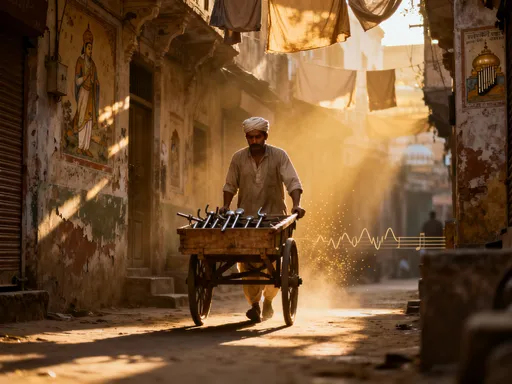
Just beyond the temple’s serene perimeter lies the bustling walled city of Amritsar, a labyrinth of narrow lanes, centuries-old buildings, and vibrant street life. Here, history isn’t confined to museums; it’s etched into weathered stone, carved wooden balconies, and the intricate frescoes that adorn forgotten havelis. These ancestral mansions, once homes to wealthy merchants and nobles, now stand as quiet witnesses to a layered past shaped by Sikh, Mughal, and British influences.
Walking through Katra Jaimal Singh or Guru Bazaar, one encounters a sensory mosaic. The scent of cardamom and cumin spills from spice shops piled high with colorful powders. Blacksmiths hammer copper in open-air forges, their rhythmic clang echoing off stone walls. Women in bright dupattas haggle over handwoven phulkari shawls, their laughter blending with the call to prayer from a nearby gurdwara. The architecture reflects this cultural confluence—arched Mughal doorways lead into courtyards framed by colonial-era railings, while frescoes depict scenes from Sikh history in faded but still vibrant hues.
Many of these havelis are in various states of preservation, some lovingly restored by families, others quietly decaying. Yet even in decline, they speak volumes. A peeling mural of Guru Gobind Singh on horseback, a delicately carved jharokha window, or a courtyard fountain overgrown with jasmine—each detail tells a story of pride, memory, and resilience. These spaces offer a quieter, more intimate encounter with Amritsar’s heritage, away from the crowds, where the city’s rhythm feels personal and enduring.
Gurdwaras Beyond the Main Shrine: Spiritual Echoes in Everyday Spaces
While the Golden Temple draws global attention, Amritsar is dotted with smaller gurdwaras that serve as spiritual anchors for local communities. These places are not monuments to history but living centers of daily worship, learning, and service. Visiting them offers a more grounded, human-scale understanding of Sikh life—one where faith is woven into routine, not reserved for grand occasions.
Gurdwara Sher Singh, nestled in a residential lane near Hall Bazaar, is one such gem. Built in the 19th century, it honors the legacy of a brave Sikh warrior and remains a place of deep local devotion. On any given morning, residents gather for kirtan—devotional singing led by ragis whose voices rise and fall in intricate raga patterns. The atmosphere is intimate, the air thick with the scent of fresh flowers and incense. Unlike the vast courtyard of the Golden Temple, here one can sit close to the Guru Granth Sahib, feel the warmth of shared prayer, and exchange quiet smiles with neighbors.
Another quiet sanctuary is Gurdwara Chaubara Sahib, believed to be the site where Guru Arjan Dev rested during the temple’s construction. It lacks the grandeur of Harmandir Sahib, but its simplicity is powerful. The langar here is modest—prepared and served by volunteers from the surrounding area—but the spirit is the same: no one eats alone, no one is turned away. These gurdwaras remind visitors that Sikhism is not just about grand gestures but about consistent, daily acts of kindness, discipline, and remembrance.
The Rhythm of Sound: Music and Voice as Cultural Keepers
In Amritsar, music is not background noise—it is a sacred thread connecting past and present. The city has long been a cradle of classical and folk traditions, where sound is both spiritual practice and cultural memory. From the pre-dawn asa di var recited in gurdwaras to the lively boliyaan sung by women during festivals, the air is alive with melody.
One of the most profound experiences for a traveler is attending a live raga performance at a local cultural center or gurdwara. On a quiet evening at the Sikh Heritage Complex, I sat cross-legged on the floor as a group of young ragis tuned their harmoniums. The first note, a deep alaap in Raag Maalaar, sent a shiver through the room. As the melody unfolded, I felt the weight of centuries—the same raga once sung by court musicians in Lahore, now carried forward by teenagers in Amritsar. The performance wasn’t showy; it was devotional, precise, and deeply felt.
Outside religious spaces, music thrives in the bazaars and courtyards. Street performers play the algoze, a pair of wooden flutes played simultaneously, their breathy tones echoing through alleyways. At wedding processions, dhol players set a thunderous pace, while women clap and sing traditional folk songs. For travelers, respectful participation is possible—many cultural centers offer short workshops on basic raga scales or dhol rhythms. These moments of engagement, even brief, create lasting connections, transforming passive listening into shared expression.
Crafting Identity: Handmade Traditions Still Alive
Amritsar’s cultural richness is not only heard and seen—it is held in the hands of artisans who continue age-old crafts with quiet dedication. In small workshops tucked behind market stalls, generations of families preserve skills that define Punjabi identity. These crafts are more than souvenirs; they are emblems of heritage, resilience, and artistry.
One morning, I visited a phulkari cooperative in the Guru Bazaar area, where women in bright saris sat around a long table, embroidering intricate floral patterns onto hand-spun cotton. Phulkari, meaning “flower work,” was traditionally made by women for their daughters’ dowries, each stitch carrying blessings and stories. The designs—geometric, symbolic, deeply personal—are never drawn first; they are created from memory, a testament to the skill passed down through decades. One artisan, Rani Kaur, showed me a shawl she was completing: “Every piece is a prayer,” she said, her needle dancing across the fabric.
Not far away, in a dimly lit shop, a jutti maker tapped a small hammer against leather, shaping a pair of traditional Punjabi shoes. These hand-stitched juttis, with their curled toes and vibrant embroidery, are worn at weddings and festivals. The craftsman, Harpreet Singh, has been making them since he was twelve. “Machines can cut faster,” he said, “but only hands can give soul.” His son works beside him now, learning the craft stitch by stitch. Supporting these artisans through mindful tourism—buying directly, asking about their process, respecting their time—ensures these traditions endure.
Taste as Culture: Flavors That Define Amritsar
To taste Amritsar is to understand its spirit. Food here is not just sustenance; it is celebration, memory, and community. From the sizzle of tandoors at roadside dhabas to the slow simmer of sarson da saag in winter homes, every dish tells a story of land, season, and togetherness.
One of the most memorable experiences was an invitation to a family home in the old city. I was welcomed with warm smiles and a plate of fresh makki di roti—corn flatbread cooked on a cast-iron griddle—served with sarson da saag, a rich mustard greens curry slow-cooked with garlic and butter. The meal was eaten with hands, seated on the floor, just as it has been for generations. The host, Mrs. Bhatia, explained how this dish is tied to the winter harvest, a time of gratitude and gathering. “We eat this not because it’s famous,” she said, “but because it’s ours.”
Street food, too, carries cultural weight. At a century-old dhaba near the railway station, I watched as cooks pulled Amritsari kulchas from a clay oven, stuffing them with spiced potatoes or paneer, then brushing them with butter and fresh coriander. These stuffed breads, once simple fare for travelers, are now iconic. Yet their essence remains humble—a quick, satisfying meal shared among friends. Even the city’s famous lassi, served in tall glasses with a layer of malai on top, is more than refreshment; it’s a gesture of hospitality, often offered freely to visitors at gurdwaras and homes alike.
For travelers, eating in Amritsar is an act of connection. It’s about slowing down, accepting an offer of tea from a shopkeeper, or sitting beside locals at a crowded stall. It’s understanding that every bite is part of a larger story—one of resilience, generosity, and joy.
How to Travel Deeply: Practical Tips for Meaningful Engagement
Immersive travel in Amritsar is not about ticking off landmarks; it’s about presence, respect, and openness. To truly connect with the city’s culture, certain practices can deepen the experience while honoring local customs. Dressing modestly is essential—shoulders and knees covered, head covered at religious sites. Carrying a lightweight scarf or dupatta is practical and respectful.
Learning a few basic Punjabi phrases—such as “Sat Sri Akal” (a traditional greeting), “Dhanyavaad” (thank you), and “Kiven mangiye?” (how may I help?)—goes a long way in building rapport. Locals appreciate the effort, and it often leads to warmer interactions. Timing visits around prayer hours—especially early morning and evening—allows travelers to witness kirtan and langar in full flow, when the spiritual energy is most palpable.
Photography should be approached with care. While the Golden Temple is frequently photographed, individuals—especially during prayer—should not be captured without permission. A simple gesture or nod can open a conversation and lead to a more meaningful exchange than any snapshot. Engaging local guides, particularly those affiliated with community-based tourism initiatives, ensures authentic insights and supports the local economy.
Most importantly, slow down. Sit in a courtyard and listen. Share a meal. Watch an artisan work without rushing to buy. These quiet moments, when the mind is open and the heart is present, are where true understanding begins.
Conclusion
Amritsar’s true magic lies not in its most famous monument, but in the countless unscripted moments that unfold in its streets, homes, and quiet corners. It is in the voice of a ragi at dawn, the hands of an embroiderer, the warmth of a shared meal. This is not tourism as performance, but travel as participation—a chance to step into a living culture and feel its pulse.
The city teaches that heritage is not something to be preserved behind glass, but something to be lived, shared, and renewed every day. To visit Amritsar deeply is to leave with more than memories—it is to carry a quiet transformation, a deeper appreciation for how tradition, community, and spirit can thrive in the modern world. Travel not just to see, but to listen, to taste, to remember. In doing so, you don’t just discover a place—you connect with its soul.