You Won’t Believe What Happens at Cappadocia’s Hidden Festival
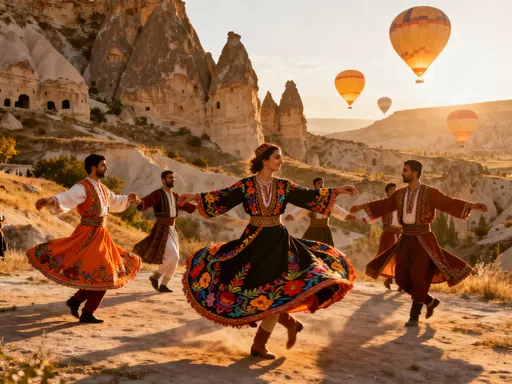
Imagine hot air balloons glowing at sunrise, traditional drumbeats echoing through ancient valleys, and locals dancing in vibrant costumes you’ve never seen before. I stumbled upon a little-known festival in Cappadocia that completely changed how I see travel. It’s not just about photo ops—it’s about connection, culture, and moments that stick with you long after you leave. This is more than a trip; it’s a living story. And honestly? You’ve probably never heard of this one.
Discovering the Unexpected
Most travelers arrive in Cappadocia with a familiar list: watch the sunrise from a hot air balloon, tour the cave churches of Göreme, snap photos in the fairy chimneys of Pasabag. These are, without question, breathtaking experiences. But they often unfold within the rhythm of curated tourism—timed entries, guided group tours, and souvenir shops lining the main paths. When I first visited, I followed that script. I stayed in a stylish cave hotel, floated above the tufa valleys at dawn, and wandered through ancient rock-cut dwellings. It was beautiful, yes—but something felt distant, like viewing culture through glass.
Then, on a quiet afternoon, I decided to walk beyond the postcard-perfect village of Üçhisar. My guidebook mentioned nothing, and my map showed only a dotted footpath winding into the hills. As I climbed a gentle ridge, I began to hear something unexpected: the steady beat of a davul, a double-headed drum that pulses through Turkish folk music. The sound grew stronger, accompanied by the bright notes of a zurna, a reed instrument often played at village celebrations. Curiosity pulled me forward.
What I found was not listed on any tourist website. In a wide stone courtyard nestled between two weathered rock formations, villagers had gathered for a festival unlike anything I’d seen. Children ran between tables laden with flatbreads and honey-drizzled pastries. Elders sat on hand-carved wooden benches, smiling as they watched young dancers rehearse intricate steps. The air carried the rich scent of grilled lamb and wild herbs. Women in embroidered aprons passed around trays of ayran, the cool yogurt drink that quenches the dry Cappadocian heat. This was not a performance for tourists. It was a living, breathing celebration—and I had walked into the heart of it by accident.
The Heart of the Festival: Culture in Motion
This gathering, known locally as the Yeraltı Kültür Şenliği or “Underground Culture Festival,” is rooted in centuries-old Anatolian traditions. While Cappadocia is famous for its subterranean cities—some stretching dozens of levels beneath the surface—this festival celebrates the culture that has endured above ground, passed down through generations despite shifting empires and modernization. It’s not a recreated spectacle but a genuine expression of seasonal gratitude, often timed to coincide with the end of the barley harvest or the arrival of spring rains that awaken the high plateau’s wildflowers.
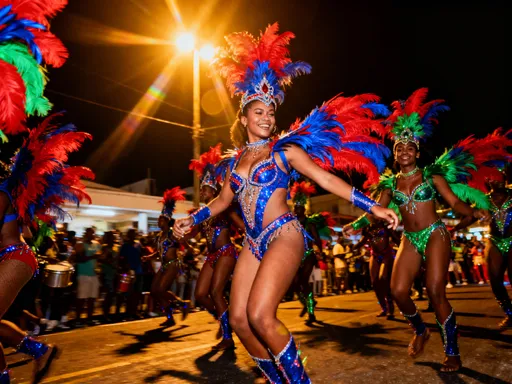
At its core, the festival is a celebration of continuity. Folk dances are performed in traditional attire—men in wide sashes and leather boots, women in layered skirts with silver brooches pinned at the shoulders. The movements are not choreographed for stage appeal but follow patterns that have been danced for hundreds of years, often in circles that symbolize unity and the cycle of life. One of the most moving moments came during a performance of the halay, a communal line dance common across central Turkey. As the tempo increased, more and more people joined—grandmothers, teenagers, even a visiting shepherd who had walked in from a nearby valley. There were no auditions, no rehearsals. Just joy, rhythm, and shared memory.
Music is not the only art form on display. In one corner of the courtyard, an elderly woman sat cross-legged beside a handwoven loom, demonstrating the craft of kilim weaving. Each color and pattern in her work carried meaning—red for vitality, geometric shapes for protection, and zigzags for the flow of water in a dry land. Nearby, a potter shaped clay on a low wheel, using techniques unchanged since the Hittite era. Visitors were invited to try their hand, and many did, laughing as their attempts wobbled into lopsided bowls. These are not demonstrations staged for sale but acts of cultural transmission, where knowledge is shared freely and with pride.
What makes this festival different from more commercial events is its lack of pretense. There are no entry fees, no VIP sections, and no amplified sound systems overpowering the natural acoustics of the valley. The organizers are not a tourism board but a collective of local families who rotate hosting duties each year. The event grows slowly, by word of mouth, and attendance remains modest—usually a few hundred people at most, many of them regional visitors rather than international tourists. This intimacy allows for real interaction, not just observation.
Why This Festival Changes Your Cappadocia Experience
Attending the Underground Culture Festival transforms a scenic journey into something far more meaningful. Most travelers come to Cappadocia for the landscape—the surreal rock formations, the sunrise balloon rides, the quiet beauty of cave chapels with faded frescoes. These are undeniably powerful experiences. But they are often passive. You look, you photograph, you move on. The festival, by contrast, invites participation. You don’t just see the culture—you step into it.
I remember the moment I was pulled into the halay dance. At first, I hesitated, unsure of the steps and self-conscious in my hiking boots. But a young woman with a warm smile took my hand and gestured for me to follow. “Like this,” she said in simple English, tapping her foot. Within minutes, I was moving in rhythm with dozens of others, arms linked, feet stomping in unison. I didn’t need to speak Turkish to feel the connection. The music, the movement, the shared laughter—it created a bond that language couldn’t fully capture.
That sense of inclusion extended to every part of the day. At a long wooden table, I was offered a plate of mantı, tiny dumplings topped with yogurt and paprika butter. An older man pointed to each ingredient as he served it, naming them slowly so I could repeat them: “yoğurt, sarımsak, pul biber.” When I struggled with the pronunciation, he laughed kindly and clapped me on the shoulder. Later, a group of children taught me how to spin a horasan, a traditional top made of olive wood, using a string and a quick wrist motion. These were not scripted interactions. They were spontaneous, genuine moments of hospitality.
Psychologists and travel researchers have long noted that such immersive experiences lead to deeper emotional resonance. A 2022 study published in the Journal of Travel Research found that travelers who engage in community-based cultural events report higher levels of satisfaction and long-term memory retention than those who stick to standard sightseeing. The reason? Active participation creates what experts call “embodied memory”—moments stored not just in the mind but in the body, through movement, taste, and touch. Dancing the halay, tasting handmade bread baked in a tandoor oven, hearing the echo of a zurna in a stone courtyard—these are the sensations that linger for years.
When and Where to Experience It
The Underground Culture Festival does not follow a fixed calendar like major national holidays. Instead, its timing is tied to agricultural cycles and local consensus, usually held in late May or early October when the weather is mild and the harvest is complete. Exact dates are often confirmed only a few weeks in advance, announced through village notice boards, regional radio stations, and informal networks. In recent years, some guesthouses in nearby towns like Çavuşin and Soğanlı Valley have begun posting updates on their websites or social media pages, but there is no centralized booking system.
The festival’s location shifts slightly from year to year, always hosted in smaller, less-visited communities rather than the tourist hubs of Göreme or Uçhisar. Çavuşin, perched on a rocky outcrop with views of the Red Valley, has been a frequent host. Its old Greek Orthodox church, carved into the cliffside, provides a dramatic backdrop for evening performances. Soğanlı Valley, farther to the west, offers a more secluded setting, with ancient rock-cut dwellings and a network of hiking trails that remain largely undiscovered by mass tourism. These villages are not hidden in the sense of being inaccessible—they are reachable by car or guided transfer—but they exist outside the usual tourist circuit.
For travelers planning to attend, the best approach is to arrive in Cappadocia a few days before the expected festival window and stay in a family-run guesthouse. The owners often have direct ties to neighboring communities and can provide timely information. Some even organize small group transfers for guests who wish to attend. While it’s possible to visit independently, having a local contact increases the chances of arriving at the right time and being welcomed warmly. It’s also worth noting that the festival is not advertised heavily, partly to preserve its intimate character and prevent overcrowding.
How to Prepare Without Overplanning
One of the most important things to understand about this festival is that it cannot be treated like a scheduled attraction. There are no tickets, no assigned seating, and no formal program. This is not a deficiency—it is the essence of the experience. Preparing for it means embracing flexibility and cultivating a mindset of openness. Overplanning can actually hinder the sense of discovery that makes the event so special.
Packing should reflect the terrain and cultural context. Comfortable walking shoes are essential, as many of the festival sites are on uneven, rocky ground. A light scarf or shawl is advisable, not only for sun protection but also as a gesture of respect when entering more traditional spaces. While Cappadocia is generally welcoming to visitors of all backgrounds, modest dress—especially for women—is appreciated in rural areas. A small backpack with water, snacks, and a notebook can be useful, but avoid anything too bulky or conspicuous.
Language is another area where small efforts make a big difference. While many younger locals speak English, especially those involved in tourism, using a few basic Turkish phrases can open doors. Simple greetings like “Merhaba” (hello), “Teşekkür ederim” (thank you), and “İyi günler” (have a nice day) are warmly received. If you’re invited to dance or share a meal, responding with even a broken sentence in Turkish—“Evet, dans edebilirim!” (Yes, I can dance!)—often brings smiles and encouragement. The goal is not fluency but respect.
Perhaps the most important preparation is mental. Let go of the need for a detailed itinerary. Accept that you may arrive and find the festival quieter than expected, or that some activities may be postponed due to weather or family obligations. These are not inconveniences but reminders that you are witnessing real life, not a performance. The beauty lies in the unpredictability—the child who runs up to teach you a game, the elder who shares a story in broken English, the moment a song begins and everyone, including you, starts to move.
Beyond the Festival: Hidden Gems Nearby
The magic of the Underground Culture Festival doesn’t end when the music stops. For those who wish to extend the experience, the surrounding villages and landscapes offer quiet, deeply authentic moments. A short hike from Çavuşin leads to the Church of St. John the Baptist, a 7th-century rock-cut chapel with well-preserved frescoes of saints and biblical scenes. Unlike the more famous churches in Göreme Open Air Museum, this site sees few visitors, allowing for a contemplative, personal encounter with history.
Soğanlı Valley, with its network of ancient dwellings and dovecotes carved into the cliffs, is another treasure. Local shepherds still use parts of the valley for grazing, and it’s not uncommon to see flocks of sheep moving along the trails at dawn. Some families offer guided sunrise walks, leading guests to vantage points where the morning light paints the rock formations in hues of rose and gold. These walks often end with a simple breakfast of fresh bread, olives, and tea served in a stone farmhouse.
For food lovers, the region is home to small, family-run eateries that serve dishes rarely found in tourist restaurants. In a courtyard in Soğanlı, I discovered a woman who prepares testi kebabı, a slow-cooked meat stew sealed in a clay pot and cracked open at the table. The aroma alone is unforgettable. Another favorite was a seasonal dish called eriste aşı, a hand-rolled noodle soup made with local lamb and wild thyme. These meals are not rushed. They are shared, often accompanied by stories about the ingredients and the seasons they come from.
Staying overnight in a village homestay deepens the connection even further. Many homes have been gently adapted for guests, with modern bathrooms added but traditional stone walls and wooden beams preserved. Waking up to the sound of roosters and the smell of baking bread creates a rhythm that feels both ancient and comforting. It’s in these quiet hours—sipping tea on a terrace, watching the stars appear over the valley—that the full impact of the festival settles in.
Why Niche Travel Moments Matter
In an age of curated travel content and algorithm-driven itineraries, experiences like the Underground Culture Festival remind us of what we risk losing when we stick only to the well-marked paths. Mainstream tourism has its place—it brings economic benefits and raises awareness of beautiful places. But it often flattens culture into consumable moments: a photo with a costume, a bite of “local” food served in a themed restaurant, a dance performed on cue. Authenticity gets packaged, priced, and scheduled.
Small, community-led festivals resist this commodification. They are not designed for Instagram. They exist because people want to celebrate who they are and where they come from. By attending them, travelers become witnesses to something real—not a reenactment, but a continuation. And in doing so, we support the preservation of traditions that might otherwise fade.
There is also an economic dimension. When visitors choose to attend local events and stay in family-run accommodations, their spending goes directly into the community. A 2021 report by the United Nations World Tourism Organization found that community-based tourism initiatives generate up to 60% more local income per traveler than conventional hotel-based tourism. This matters in regions like Cappadocia, where the tourism economy is growing but often benefits larger operators more than rural families.
But beyond economics and preservation, these moments change us. They challenge the idea that travel is about collecting destinations. Instead, they invite us to slow down, listen, and participate. They teach humility—that we are guests, not customers. And they offer a rare gift: the chance to be surprised by joy in a place we thought we already knew.
Conclusion
This festival isn’t just a side note—it’s a doorway into the soul of Cappadocia. It reminds us that the best travels aren’t about checking boxes, but about letting yourself be surprised by the real, living culture beneath the surface. When you go, don’t just watch—join in. Because sometimes, the most unforgettable moments happen when you least expect them. Let the music pull you into the circle. Let the food warm your hands. Let the stories of people who have lived in these valleys for generations become part of your own journey. In the end, travel is not just about where you go. It’s about who you become along the way.