You Won’t Believe These Hidden Viewpoints in Cambridge
Cambridge isn’t just about old libraries and punting on the river. I stumbled upon some of the most breathtaking viewpoints that most tourists completely miss. From quiet rooftop glimpses to secret garden corners, these spots offer a whole new perspective on the city. If you think you’ve seen Cambridge, think again—there’s a quieter, more poetic side waiting to be discovered. Let me take you to where the skyline whispers history and beauty meets stillness.
Beyond the Tourist Trail: A Different Side of Cambridge
Most visitors arrive in Cambridge with a mental checklist: King’s College Chapel, the Mathematical Bridge, a punt ride past The Backs. These are undeniably beautiful, and rightly celebrated. Yet the true soul of the city often lies just beyond the postcard images, in moments of stillness and unexpected vantage points known more to locals than to guidebooks. While the footpaths along the River Cam buzz with tour groups and students rushing between lectures, quieter lanes, elevated rooftops, and tucked-away green spaces reveal a Cambridge that feels personal, almost private. This is not a city meant to be rushed through, but savored in slow glances and lingering pauses.
Shifting your gaze from the expected to the overlooked transforms the experience of travel. When we step off the main routes, we stop seeing Cambridge as a series of monuments and begin to feel its rhythm. The chime of clocks from distant towers, the way sunlight strikes a centuries-old stone wall in the late afternoon, or the sudden glimpse of a spire through a narrow alley—these are the moments that imprint themselves on memory far more vividly than any checklist item. The charm of the city is not just in its grandeur, but in its quiet details, the subtle play of history and nature that unfolds when you allow yourself to wander with intention.
Seeking out hidden viewpoints is more than a photography tactic; it’s a mindset. It encourages mindfulness, curiosity, and a deeper connection to place. Instead of viewing the city as a static backdrop, you begin to see it as a living, breathing entity, shaped by time and daily life. Whether it’s a bench in a secluded garden or a café window with a perfect view of a quiet courtyard, these lesser-known spots invite contemplation. They offer space to breathe, to reflect, and to truly see. For travelers, especially those who value depth over speed, discovering these quiet perspectives turns a simple visit into a meaningful journey.
The College Roofs You’re Not Supposed to See (But Can)
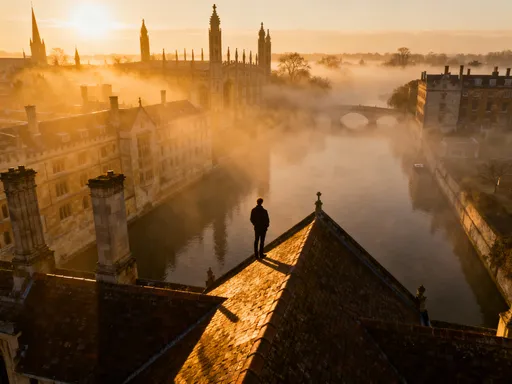
One of the most striking ways to experience Cambridge is from above. While many college courtyards remain closed to the public, several historic buildings offer limited but legal access to elevated views. King’s College Chapel, with its soaring Gothic spire, provides one of the most iconic vantage points when viewed from the top of the tower at St John’s College. Though not always open to visitors, the tower occasionally hosts special viewing hours, particularly during festival seasons or heritage open days. For those lucky enough to gain access, the panorama is unforgettable—rooftops stretch like a stone tapestry, punctuated by chimneys, cupolas, and the occasional flutter of academic gowns in the wind.
Even without entry, the exterior of certain college buildings offers remarkable perspectives. The rear of Trinity College, especially when viewed from Garret Hostel Bridge, presents a layered composition of arches, towers, and reflective river surfaces. At golden hour, when the late sun bathes the limestone façades in warm amber light, the entire scene glows with a quiet majesty. This is the magic of Cambridge’s architecture—it transforms with the light, revealing new textures and dimensions that daytime visits often overlook.
Patience and timing are key to unlocking these views. Early mornings on weekdays tend to be less crowded, allowing for unobstructed sightlines and a sense of solitude. Some colleges, such as Pembroke and Christ’s, have small public-access gardens or viewing platforms during certain hours. These quiet moments—standing alone beneath a sky painted with dawn colors, surrounded by centuries of scholarly silence—are among the most profound experiences the city offers. For those who respect access rules and plan thoughtfully, Cambridge rewards with glimpses few ever witness.
Green Spaces with a View: University Botanic Garden Secrets
Just a short walk from the city center, the University Botanic Garden offers a sanctuary where nature and architecture coexist in perfect harmony. Spanning over 40 acres, this living museum of plants is more than a place to admire flowers—it’s a carefully composed landscape that frames the city in unexpected ways. Along the northern edge of the garden, a quiet path lined with yew hedges leads to a bench that faces south, where the spire of the Leys School rises gently above a canopy of oak and beech. It’s a subtle view, easy to miss, but one that captures the essence of Cambridge: education, history, and nature intertwined.
Another hidden gem lies near the Rock Garden, where a small rise in the terrain offers a partial view of the city skyline. On clear mornings, the sun lifts over the eastern rooftops, casting long shadows across the flowerbeds and illuminating dew-covered petals. The sound of birdsong, the rustle of leaves, and the distant chime of a clock tower create a multisensory experience that enhances the visual beauty. This is not a dramatic panorama, but an intimate one—a reminder that some of the best views are not the grandest, but the most peaceful.
The garden’s design encourages slow exploration. Winding paths, secluded seating areas, and carefully placed openings in the foliage ensure that views unfold gradually, like scenes in a story. A weeping willow near the lake partially obscures a view of a red-brick Victorian building, creating a natural frame that feels almost painterly. For visitors who take the time to wander without a map, the garden becomes a place of discovery, where every turn offers a new composition of light, color, and perspective. It’s an ideal retreat for those seeking a moment of calm, especially during the busy spring and summer months.
Punting with a Purpose: Finding the Perfect River Angle
Punting is often seen as a tourist ritual, a must-do activity checked off in an hour. But when approached with intention, it becomes one of the most poetic ways to view Cambridge. The river offers a moving canvas, where reflections shift with the current and light dances across centuries-old stone. To experience this fully, it’s best to go beyond the standard route between Magdalene Bridge and Silver Street. Venture further upstream, behind Queen’s College, where the water slows and the surroundings grow quieter. Here, the Mathematical Bridge appears not as a crowded landmark, but as a graceful curve of timber reflected perfectly in still water.
Another exceptional stretch lies near the Mill Pond, where the river widens and ancient willows dip into the current. From this vantage, the rear façades of King’s, Clare, and Trinity Hall Colleges unfold like a series of stage sets, each more ornate than the last. The absence of foot traffic on this side of the river means fewer distractions and more opportunities to capture the city in its most serene state. Early morning is ideal—fog often lingers on the water, softening edges and creating an almost dreamlike atmosphere. Photographers and contemplative travelers alike will find this stretch deeply rewarding.
For those hiring a punt, consider going at sunrise or just before sunset. Not only are the crowds thinner, but the light transforms the city. At dawn, the stone glows in soft pastels; at dusk, it deepens into rich golds and russets. Bring a thermos of tea or coffee, dress warmly, and allow at least an hour to drift slowly, soaking in the views. If you’re punting yourself, practice a bit first—control and calm are essential for a peaceful journey. Alternatively, hiring a chauffeured punt allows you to relax completely and focus on observation. Either way, the river offers a unique, fluid perspective that no land-based viewpoint can replicate.
Local Haunts with a Skyline Perch
While guidebooks highlight the famous colleges and museums, some of the best views in Cambridge are found in places locals frequent—quiet cafés, neighborhood parks, and unassuming streets. One such spot is a small hill along Grantchester Road, near the junction with Barton Road. From this elevation, on a clear day, you can see a sweeping view of the city center, with King’s College Chapel rising prominently in the distance. It’s not marked on any tourist map, but it’s a favorite among runners and dog walkers who appreciate the vista at sunrise.
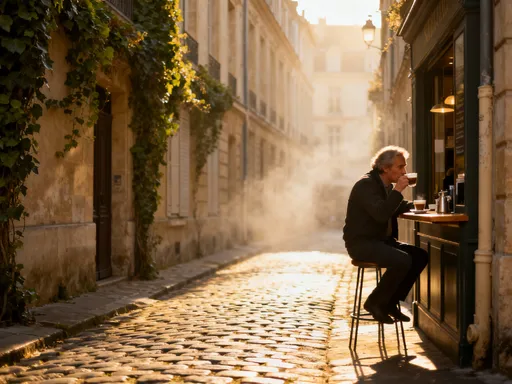
Another hidden gem is a family-run café on Lensfield Road, where the upper-floor seating area faces directly toward a quiet corner of Pembroke College. From this window, you can watch students cross the courtyard, see the changing light on the chapel’s stonework, and enjoy a cup of tea in peaceful solitude. The café is unpretentious—no Wi-Fi, no crowds—but its atmosphere is warm and welcoming. It’s the kind of place where time seems to slow, and the city feels both close and distant at once.
Small public parks also offer unexpected overlooks. The garden at the rear of the Whipple Museum, though rarely mentioned in travel guides, provides a tranquil space with a partial view of the Cavendish Laboratory’s historic façade. Similarly, a bench in Parker’s Piece, when positioned just right, frames a distant view of the University Library’s tower against the sky. These are not dramatic panoramas, but quiet moments of beauty that reward those who look closely. By embracing local rhythms—visiting neighborhood markets, walking residential streets, stopping at independent cafés—travelers gain access to a more authentic, grounded experience of Cambridge.
Sunrise vs. Sunset: Timing the Light in an Ancient City
The character of Cambridge changes dramatically with the time of day, and nowhere is this more evident than in the quality of light. Sunrise brings a hushed, almost reverent atmosphere. The streets are quiet, the air crisp, and the first rays of sun gild the highest spires, turning them into beacons. At this hour, the city feels suspended in time. The stone of King’s College Chapel, usually a cool gray, warms to a soft rose hue, and the river reflects a sky painted in lavender and peach. Few tourists are out at this hour, making it a rare opportunity to experience the city in near-solitude.
Sunset, by contrast, is a more dramatic affair. As the sun dips behind the western colleges, the light intensifies, setting the limestone facades ablaze in deep gold and crimson. The shadows grow long, adding depth and dimension to the architecture. The area around King’s College, particularly from the footpath on The Backs, becomes a favorite spot for photographers. Yet even here, arriving just before peak hour—around 5:30 p.m. in late spring or early autumn—can mean having the view almost to yourself.
Each time of day offers a different emotional tone. Sunrise inspires reflection and calm, perfect for a meditative walk or quiet sketching. Sunset evokes warmth and grandeur, ideal for capturing the city’s majestic side. Both are underutilized by most visitors, who tend to explore only during midday hours. By adjusting your schedule, even slightly, you gain access to a Cambridge that feels more intimate, more alive. The interplay of light and shadow, the shifting colors of stone and water—these are the details that elevate a visit from pleasant to profound.
Why Slowing Down Reveals More Than Any Guidebook
In an age of fast travel and curated itineraries, the deepest experiences often come from doing less. Cambridge is not a city to be conquered in a single day, but one to be returned to, revisited, and reseen. The same bridge, viewed at dawn, noon, and dusk, appears as three different places. A courtyard that seems ordinary in daylight reveals intricate carvings when lit by evening lamps. A tree in the Botanic Garden, bare in winter, becomes a canopy of green in summer, altering the entire perspective from a favorite bench.
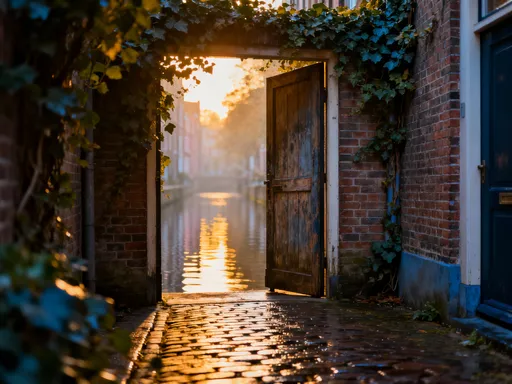
True appreciation grows not from ticking off landmarks, but from observing how they change with time, weather, and mood. Sitting in one place for an hour—watching students pass, listening to the wind in the trees, noticing how light moves across a wall—can teach you more about the city than any museum placard. This kind of travel is not about accumulation, but about presence. It’s about allowing yourself to be surprised, to notice the small things: a cat sleeping on a windowsill, a bicycle leaning against a centuries-old door, the way fog curls around a spire at dawn.
Cambridge, with its layers of history and quiet beauty, invites this kind of attention. Its hidden viewpoints are not just physical locations, but states of mind—moments of stillness that allow the city to reveal itself. For travelers, especially those who value depth, reflection, and authenticity, these quiet perspectives offer a richer, more lasting connection. So the next time you visit, leave the checklist behind. Walk without a destination. Sit. Wait. Watch. Let the city unfold at its own pace. See Cambridge not as a list of sights, but as a living canvas, always changing, always beautiful.