You Won’t Believe These Cultural Gems in Bandar Seri Begawan
If you think Brunei’s capital is just quiet streets and quiet vibes, think again. Bandar Seri Begawan hides stunning cultural spots that feel like stepping into a living postcard. I was blown away by the golden domes, intricate carvings, and serene atmosphere at every turn. Whether you're chasing that perfect golden-hour shot or just soaking in local heritage, these photo-worthy venues deliver. Let me take you through the most visually rich cultural heart of Brunei — where tradition meets breathtaking beauty.
The Majesty of Omar Ali Saifuddien Mosque
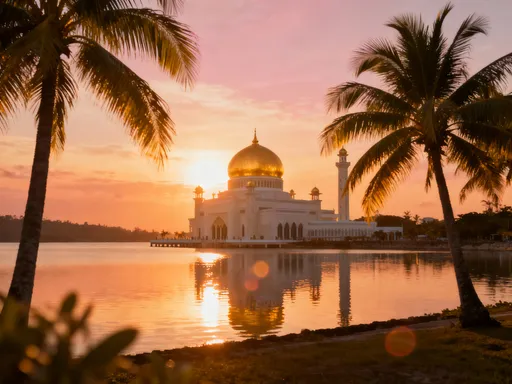
Rising like a vision from the waters of Brunei’s capital, the Omar Ali Saifuddien Mosque stands as a masterpiece of Islamic architecture and a symbol of national pride. Completed in 1958, this grand structure was named after the 28th Sultan of Brunei and remains one of Southeast Asia’s most photographed religious sites. Its central golden dome, which soars 52 meters into the sky, is plated with genuine gold, shimmering under the tropical sun and casting a warm reflection across the surrounding lagoon. The mosque’s design blends Mughal and Italian influences, evident in its grand arches, intricate stucco work, and the use of fine Italian marble throughout its interior and exterior.
For visitors, the visual impact is immediate and profound. The mosque appears to float on a man-made lagoon, connected to the mainland by a short causeway, creating a sense of serene isolation. This reflective setting enhances both its beauty and spiritual aura, especially at sunrise or sunset when the golden dome catches the light in a radiant glow. Photographers often gather along the adjacent promenade to capture the full symmetry of the structure, with the still water doubling the image in a mirror-like effect. The best angles include a low-angle shot from the edge of the lagoon, which emphasizes the dome’s height, or a wide frame that includes the surrounding palm trees and gentle ripples across the water.
While the exterior is breathtaking, the interior is equally impressive. Visitors are welcomed into a vast prayer hall adorned with Persian carpets, crystal chandeliers imported from England, and a hand-carved wooden pulpit. Non-Muslim guests are permitted to visit during designated hours, typically in the late morning or early afternoon, provided they dress modestly and remove their shoes before entering. It is essential to check the daily prayer schedule, as the mosque closes to tourists during the five daily prayers, especially Friday’s noon service, which draws the largest congregation. During these times, silence and respect are paramount.
The mosque is not only a place of worship but also a cultural landmark that reflects Brunei’s deep-rooted Islamic traditions and its historical ties to broader Islamic civilizations. Its construction marked a turning point in the nation’s modern identity, blending religious devotion with architectural ambition. For travelers, a visit here offers more than just photo opportunities — it provides a moment of quiet contemplation and a deeper understanding of the values that shape Bruneian society. The contrast between the mosque’s grandeur and the calm waters that surround it serves as a powerful metaphor: strength and serenity can coexist, and beauty often thrives in stillness.
Cultural Immersion at the Brunei Museum
Just a short drive from the city center lies the Brunei Museum, a quiet yet profound gateway into the nation’s rich cultural and natural heritage. Established in 1965, this national institution serves as a repository of Brunei’s past, housing a diverse collection that spans archaeology, ethnography, and natural history. While the building itself may not be as visually striking as some of the capital’s golden landmarks, its contents offer an invaluable context for understanding the traditions, customs, and daily life that continue to define Bruneian identity today.
Inside, visitors encounter carefully curated exhibits that trace the evolution of Brunei from ancient riverine settlements to a modern Islamic monarchy. One of the most compelling displays features artifacts from pre-Islamic times, including bronze drums, ceramic shards, and stone tools that reveal early trade connections with China and Southeast Asia. These objects, though modest in appearance, speak volumes about the region’s historical significance as a hub of maritime exchange. Equally fascinating are the sections dedicated to traditional Bruneian life, where full-scale models of stilt houses, farming tools, and ceremonial costumes provide a vivid picture of how communities lived for generations along the Brunei River.
Photography within the museum is permitted in most areas, though flash is typically discouraged to protect delicate textiles and artifacts. Some of the most striking photo opportunities include close-ups of intricately woven malong fabrics, ceremonial headdresses adorned with beads and feathers, and reconstructed scenes of village life set against wooden backdrops. While the museum’s exterior may not offer the dramatic skyline views found elsewhere in the city, its interior spaces — with soft lighting and thoughtful layouts — create intimate settings perfect for reflective photography.
What makes the Brunei Museum particularly valuable for travelers is its ability to connect the dots between what they see on the surface and the deeper cultural narratives beneath. After visiting the Omar Ali Saifuddien Mosque, for instance, guests can come here to learn about the spread of Islam in the region and how it shaped local governance, art, and social customs. Similarly, a trip to Kampong Ayer becomes more meaningful when visitors understand the historical continuity of water village life, a theme explored in detail within the museum’s ethnographic wing. Though quieter and less frequented than other tourist spots, the museum plays a vital role in preserving Brunei’s intangible heritage and offering visitors a more rounded experience of the nation’s story.
Walking Through Time at Kampong Ayer: The Venice of the East
No visit to Bandar Seri Begawan is complete without experiencing Kampong Ayer, a sprawling network of stilted villages built over the Brunei River. Often referred to as the “Venice of the East,” this unique settlement has been home to thousands of Bruneians for over 1,300 years, making it one of the oldest continuously inhabited communities in Southeast Asia. From a distance, the sight of colorful wooden houses connected by elevated walkways stretching across the water is both surreal and enchanting. Up close, the village reveals a vibrant tapestry of daily life — children playing on docks, fishermen mending nets, and elders chatting under shaded verandas.
The best way to appreciate Kampong Ayer’s scale and charm is from above. The public viewing tower near the city center offers a panoramic perspective, allowing photographers to capture the intricate maze of homes, boats, and bridges that form this aquatic neighborhood. The golden hour, just before sunset, bathes the scene in warm light, highlighting the contrast between weathered wood and bright paint, while reflections ripple gently across the river’s surface. From this vantage point, it’s easy to see how the village functions as a self-contained community, complete with schools, mosques, and even a police station — all built on stilts above the water.
For a more immersive experience, visitors can take a boat tour operated by local guides. These small wooden boats glide quietly through narrow channels, offering an intimate look at life in the village. Houses are often painted in cheerful hues — turquoise, coral, and sunflower yellow — and many are adorned with potted plants and laundry flapping in the breeze. Along the way, guides share stories about the history of Kampong Ayer, its resilience through floods and modernization, and the strong sense of community that binds its residents. Some families welcome guests into their homes, offering a rare opportunity to see traditional interiors and learn about daily routines.
When photographing Kampong Ayer, sensitivity is key. While the scenery is undeniably picturesque, it’s important to remember that this is a living community, not a staged attraction. Always ask permission before photographing people, especially children or those engaged in private activities. Avoid using zoom lenses in a way that feels intrusive, and be mindful of signs indicating restricted areas. By approaching the village with respect and curiosity, travelers can capture authentic moments without disrupting the rhythm of daily life. The result is not just a collection of images, but a deeper appreciation for a way of life that has endured for centuries.
Royal Regalia Museum: Where History Shines
Dedicated to the reign and legacy of Sultan Hassanal Bolkiah, the Royal Regalia Museum stands as a tribute to Brunei’s monarchy and national identity. Opened in 1992 to commemorate the Sultan’s silver jubilee, this striking building combines modern architectural design with traditional motifs, creating a space that is both grand and symbolic. The exterior features a blend of Islamic and Malay elements, including domes, arches, and ornate carvings, while the interior is designed to guide visitors through a chronological journey of the Sultan’s rule, national celebrations, and key moments in Brunei’s modern history.
The museum’s most dazzling displays are housed in a series of climate-controlled halls, where ceremonial regalia, royal vehicles, and state gifts are presented with museum-quality precision. Among the highlights is the golden chariot used during the Sultan’s coronation, an opulent vehicle adorned with precious stones and intricate metalwork. Nearby, visitors can see the Sultan’s collection of luxury cars, including a custom Rolls-Royce and a Mercedes-Benz used in official processions. These vehicles, though not in active use, are meticulously maintained and serve as symbols of national prestige.
Photography inside the museum is allowed in most galleries, and the lighting is designed to enhance both visibility and visual impact. The early morning hours offer the best conditions for photography, as natural light filters gently through the skylights, reducing glare on glass display cases. The central hall, with its high ceiling and reflective marble floors, creates a sense of grandeur that translates beautifully into wide-angle shots. Close-up photography of the regalia — such as the Sultan’s crown, ceremonial sword, and embroidered robes — reveals the extraordinary craftsmanship involved in their creation.
Beyond the opulence, the museum serves an important educational role. Informative panels, many in both English and Malay, explain the significance of each artifact and its role in state ceremonies. Temporary exhibitions often focus on national holidays, royal weddings, or diplomatic events, offering insights into how tradition and modernity coexist in contemporary Brunei. For visitors, the Royal Regalia Museum is more than a showcase of wealth — it is a narrative of national pride, continuity, and cultural preservation. By presenting the monarchy not just as a figurehead but as a living institution, the museum helps bridge the gap between the people and their ruler, fostering a sense of shared identity.
Discovering Craftsmanship at Malay Technology Museum
Nestled along the banks of the Brunei River, the Malay Technology Museum offers a peaceful and often overlooked glimpse into the traditional skills and innovations of the Malay world. Unlike larger institutions, this museum focuses specifically on pre-industrial technologies, showcasing how early communities harnessed natural resources to build homes, travel waterways, and sustain their livelihoods. The site itself is arranged like a small village, with reconstructed wooden huts, boat sheds, and working models of traditional tools scattered across a shaded, garden-like setting.
One of the most captivating exhibits is the collection of traditional boats, known as perahu. These vessels, once essential for fishing, trade, and transportation, vary in size and design depending on their purpose. Some are long and narrow for speed, while others are broad and flat-bottomed for carrying goods. Many are carved from single logs and feature intricate prow carvings believed to offer protection at sea. Photographers will find excellent opportunities here, especially in the late afternoon when sunlight filters through the trees, casting dappled shadows across the weathered wood. The reflective surface of the adjacent river adds depth to compositions, particularly when capturing the boats from a low angle.
Other exhibits include models of stilt houses built using traditional joinery techniques, weaving looms used to create textiles, and replicas of ancient irrigation systems. Interactive elements, such as touchable materials and explanatory diagrams, make the museum especially engaging for families and curious travelers. Because it is less frequented than other attractions, the Malay Technology Museum offers a rare advantage: quiet, crowd-free spaces ideal for contemplative photography and unhurried exploration.
What sets this museum apart is its emphasis on functionality and sustainability. The displays illustrate how early Malay engineers solved practical problems using locally available materials and ancestral knowledge — principles that resonate strongly in today’s conversations about eco-friendly design. For visitors, the experience is both educational and inspiring, offering a reminder that innovation is not always about technology, but often about adaptation and wisdom. By preserving these traditional methods, the museum ensures that future generations can appreciate the ingenuity behind Brunei’s cultural heritage.
Sunset Vistas from Taman Mahkota Jubli Emas
Opened in 2017 to celebrate the 50th anniversary of Sultan Hassanal Bolkiah’s birth, Taman Mahkota Jubli Emas — or the Golden Jubilee Crown Park — is a beautifully landscaped riverside destination that has quickly become a favorite among locals and visitors alike. Spanning several hectares along the Brunei River, the park features wide walkways, cascading fountains, illuminated arches, and open lawns designed for relaxation and celebration. At its heart stands a striking crown-shaped structure, symbolizing the Sultan’s golden jubilee and serving as a focal point for evening light shows.
The park truly comes alive at sunset, when the sky shifts through hues of amber, rose, and violet, casting a golden glow over the water. This is the ideal time for photography, as the changing light enhances the textures of the stone pathways, the movement of the fountains, and the reflections on the river’s surface. The crown monument, illuminated after dusk, becomes a radiant centerpiece, especially when captured with a slow shutter speed to blur the flowing water in the foreground. Wide-angle lenses work well here to include both the skyline of Bandar Seri Begawan and the dynamic elements of the park.
What makes Taman Mahkota Jubli Emas particularly special is its role as a community space. In the evenings, families gather to stroll, children play near the splash pads, and couples sit on benches enjoying the breeze. These candid moments offer rich opportunities for cultural photography — not posed, but authentic. Street vendors sometimes set up near the entrance, selling local snacks like kuih and iced coconut, adding another layer of sensory experience. While photographing people, it’s advisable to smile, make eye contact, and ask permission when focusing on individuals, especially in close-up shots.
The park also hosts public events during national holidays, including light displays, cultural performances, and fireworks. These occasions transform the space into a festive hub, offering vibrant photo opportunities that capture the spirit of Bruneian celebration. Even on ordinary days, the atmosphere remains uplifting, a testament to thoughtful urban planning that prioritizes beauty, accessibility, and civic pride. For travelers, a visit here provides a gentle, joyful conclusion to a day of cultural exploration — a reminder that heritage is not only preserved in museums and mosques, but also lived in the spaces where people come together.
Balancing Beauty and Respect: Photography Etiquette in Brunei
Capturing the beauty of Bandar Seri Begawan’s cultural sites is a rewarding experience, but it comes with the responsibility to do so respectfully. Brunei is a conservative Islamic country, and visitors are expected to adhere to local customs, particularly when photographing religious sites, government buildings, and people. Understanding and following basic photography etiquette ensures that your presence is welcomed and that you contribute positively to the communities you visit.
When visiting mosques or other religious sites, always check for signage indicating whether photography is permitted. In many cases, exterior shots are allowed, but interior photography may be restricted, especially during prayer times. If photography is allowed, avoid using flash, and never point your camera toward individuals who are praying. Dress modestly — women should cover their shoulders and knees, and both men and women should remove their shoes before entering sacred spaces. These small gestures go a long way in showing respect for local traditions.
When photographing people, especially in residential areas like Kampong Ayer, always ask for permission first. A simple smile and gesture toward your camera are often enough to communicate your intent. If someone declines, accept their decision gracefully. Children should never be photographed without parental consent. In crowded spaces like markets or parks, candid shots are generally acceptable as long as they do not focus on individuals in a way that feels invasive.
Additionally, avoid photographing military installations, police stations, or any infrastructure that could be considered sensitive. While most tourist areas are safe for photography, it’s better to err on the side of caution. By practicing mindful photography — being aware of your surroundings, respectful of boundaries, and considerate of others — you not only protect the dignity of the local community but also enrich your own travel experience. The most meaningful photos are not just visually striking, but ethically taken, capturing moments of connection rather than intrusion.
Bandar Seri Begawan’s cultural venues aren’t just backdrops — they’re stories in stone, wood, and water. By visiting with curiosity and care, travelers don’t just collect photos, but meaningful connections. These places remind us that beauty thrives where tradition is honored — and that the best shots come from seeing deeper.